'The most beautiful thing we can experience is the mysterious. It is the source of all true art and all science. He to whom this emotion is a stranger, who can no longer pause to wonder and stand rapt in awe, is as good as dead; his eyes are closed.'
Albert Einstein
.jpg)
Lynnette Evans BSc, RSHom, Homoeopath
About me
My name is Lynnette Evans, and my practice is based in Chudleigh, South Devon. I was born in Devon and have been blessed to have lived here all my life.
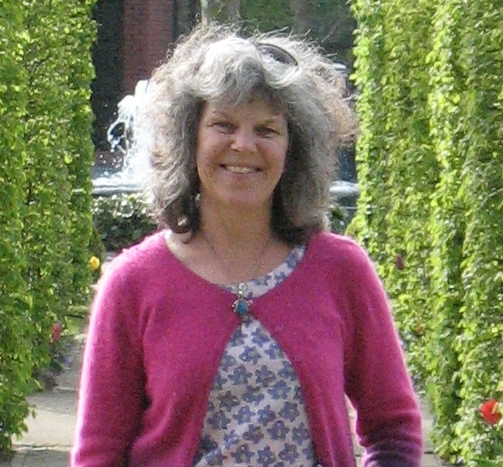
I received my license to practise as a homoeopath from the British School of Homeopathy after four years of study. I am professionally registered by the Society of Homeopaths (RSHom), bound by their Code of Ethics. I also have an Open University psychology degree. I come from a large family, am married with three adult children and three grandsons. I have a very broad life experience which includes working with children, families, the elderly, and prisoners, as well as a good deal of community work.
In the 1990s I used over-the-counter homoeopathic remedies for myself and my family. Then in 2002 my own physical and emotional health was greatly improved when I consulted a homoeopath for a longstanding physical problem. I became a passionate advocate of homoeopathic medicine, decided to train as a homoeopath - and I continue to love it, and be amazed by it!
When you are ill ...
 The body has the amazing ability to heal itself. I sometimes think we have forgotten that. When it is working hard at trying to heal itself, it produces symptoms, and it is these that tell you the nature of the unseen disease that is making you ill and giving you symptoms and sensations. A high temperature, a skin complaint, an inability to eat, deep sadness, stiffness in your joints, organs not working as they should - these are not the disease itself, but the symptoms, so just making the symptoms go away isn't the whole story. Mending the symptom is a bit like just mending the warning light in your car; do that, and sooner or later you're in for more trouble. Sometimes your body needs help with its healing work and its underlying suscepibility to illness needs to be addressed. Homoeopathy may be the way forward for you.
Homoeopathy is a system of natural healthcare that is different from what most people are used to, because it works with your body's own healing capacity, rather than taking an 'anti' approach. It is a long-established and life-enhancing system; over the past 200 years millions of people worldwide have been been helped by seeing a homoeopath and by taking homoeopathic remedies, using the basic homoeopathic principle, written about by Hippocrates 'By similar things a disease is produced and through the application of the like is cured'. Like cures like. Samuel Hahnemann, the founder of homoeopathy, said ‘the highest ideal of a cure is the rapid, gentle and permanent restoration of health’.
Why would you consider seeing a Homoeopath ...
You may consult a homoeopath if you are feeling unwell, in pain, perhaps since a particular event or illness; you may want to try something different from conventional medicine; or because no-one can tell you 'what it is', or even says that nothing can be done for you. You may have exhausted every possibility that conventional medicine has to offer, or struggled to cope with the side effects of conventional drugs. Some people go to a homoeopath with a specific diagnosis that they need help with, or with symptoms that conventional medicine doesn't understand (medically unexplained symptoms), others just know that they don't feel right. You can consult a homoeopath regardless of the symptoms that you are experiencing, be they physical, mental, or emotional, chronic or acute. And you can be any age, from newborn to elderly. But seeing a homoeopath is very different from seeing a doctor. Consultations are longer and more detailed, and even things that seem unimportant, or silly to mention, are very valuable pointers for the homoeopath in the process of understanding the dynamic of your ill-health. Conventional medicine needs to give a diagnosis before a drug can be found to treat that condition. Homoeopathy doesn't. A homoeopath doesn't treat a condition, she treats the person she sees in front of her, with the unique presentation of symptoms manifest in you, a suffering human being, and aims to bring you back to a better state of well-being. And that's what people value.
Your First Visit...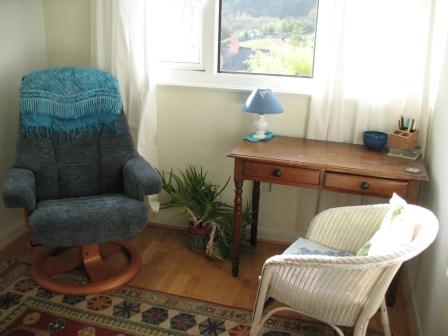
Your first visit may last up to 1½ hours, because I need to get a picture of all your symptoms and how they affect you and your life. I will both observe you and listen carefully and mindfully to what you tell me about how you feel, where you are hurting. Your symptoms, medical history, way of life, hopes and fears, likes and dislikes - all are important to me, nothing is irrelevant - and help me to find the remedy that is right for you.
Follow Up Visits ...
'Feeling better' can take time or it can happen quickly. Some people continue to see a homoeopath for years, depending on the complexity of their symptoms and the depth of the shifts in their well-being that they are seeking. As a minimum though, you will need to come for at least two follow-up visits, maybe more, and these take up to an hour. I will want to know what happened to you and your body after you took the medicine that I prescribed, to enable me to decide how to continue your treatment. Consultations for acute illness (eg 'flu) are much shorter, and are even likely to be done over the phone. I may also ask you to communicate with me in between consultations.
About the Remedies ...
Homoeopathic ‘remedies’, are made from substances such as plants or minerals that have been repeatedly and extremely diluted and shaken. It has been discovered that this makes them more 'potent' and effective, and also non-toxic, than they would have been in their biological or chemical state. They are very inexpensive to produce, and their production, unlike mainstream drugs has very little impact on the environment. They have no side effects (although very occasionally a brief intensification of present symptoms or a transitory return of old symptoms can occur as part of the healing process). This makes them safe for everyone, including children, pregnant women, and the elderly. Homoeopaths discover the sort of symptoms that a remedy can heal by testing it on healthy people, a process called a 'proving', and also by observing and noting its effect on ill people, through clinical practice. This is a rich source of guidance to a homoeopath, and our books are full of such observations. The remedies are made by specialist pharmacies in a range of potencies and given in the smallest amount needed to stimulate your body, or 'vital force'. Usually only one medicine is prescribed at a time, although complexity may require a different way of prescribing. Any drugs prescribed by your GP remain the responsibility of your GP, and can be taken alongside homoeopathic remedies. Sometimes people find that they are able to reduce or completely stop conventional drugs that they are taking, although such a step is one to be taken with the guidance of your GP, and is outside my own remit.
How does Homoeopathy Work?
As living beings, we are made from energy that has become so dense that it is visible and solid. And just like any other kind of energy, we vibrate; you get proof of that when you sit on a bus waiting at the traffic lights, drill a hole in a wall, feel the pounding music from a car full of young people. If our energy gets disturbed by something harmful, we feel out of sorts, out of balance, ill. The harmful disturbance may be something hereditary, a germ, an accident, an emotional pain, but also something that we can't even see or trace. The degree of disturbance will be different in each person, because we each have different degrees of vulnerability and resistance. Yet because each of our cells is interconnected with every other cell, a disturbance felt in one part will eventually be communicated to the other parts, sometimes quickly, sometimes slowly, and often without us even knowing that this is happening. Disease/illness is dynamic, because we ourselves are dynamic. As a result, you will have symptoms that seem completely unconnected, and to which conventional medicine will give different names - laryngitis, chest infection, diabetes, depression - yet they will all be down to the same imbalance in your body that first came about 5 - 15 - 30 years ago. It may be that doctors won't know the cause of your symptoms, but a homoeopath will recognise the pattern of this disturbance, and be able to prescribe a dynamic homoeopathic medicine that matches the dynamic of your disease symptoms. In the above list of disease names, if additionally the person loves socialising, is generous, likes being the centre of attention, maybe (but not necessarily!) a bit flirty, Phosphorus could be a good remedy to prescribe. So it works with whatever is going on in your body, rather than fighting it. That way, there's no collateral damage, known in conventional medicine as side effects.
Homoeopathic remedies are currently believed to be submolecular, which means that there is no molecule of the original substance in it. That doesn't mean that there's 'nothing in it'. Instead, structural (rather than chemical) information about a substance is somehow stored in water when it is both extremely diluted and shaken. It is an imperfect analogy, but I think of it as being a bit like a piece of music that was played by an orchestra, yet not a trace of the original orchestra, players or instruments, can be found on the CD, no matter how hard you try. Instead what is there is information, produced in the form of the sound that the orchestra made. And just as a CD put into a toaster is incapable of bringing forth sound, a homoeopathic remedy will have no effect if it is put into the 'wrong' person. Placebo is an amazing effect - homoeopathy is even more than that.
How that information is transferred to water, into the homoeopathic remedy, and ultimately taken up by your body is not yet fully understood, but is the subject of ongoing high quality research in a number of countries. There is infact already a great deal of evidence that homoeopathy works, on people, animals, and plants, in addition to any placebo effect that it may have. Evidence comes from the tens of thousands of people who have experienced it, from records of epidemics where people were treated homoeopathically; and from worldwide research either in laboratories or on people; see 'Links' below for sources of further information. Research is limited by funding - who wants to do research into a natural substance that cannot be patented? Fortunately there are scientists who are prepared to investigate further, but more research is needed to understand from an objective, scientific perspective what homoeopaths have consistently observed in their clinics.
As a gardener who uses homoeopathic medicines for my plants, I have found that it seems to save them from the ravages of slugs, aphids, caterpillars, without killing them, and with no further need for man-made chemicals. And as a gardener, I want my plants to be as healthy, productive, and happy as they can possibly be. Homoeopathy is a very sustainable approach to disease in humans, animals and plants.
Please feel free to discuss your health with me prior to booking an appointment.
 Telephone 01626 852553
Email: homoeopathy@coombemoor.org.uk
Cost: First visit: £60, Follow-up visits: £40
Under 16s: £45/£30
Consultations for acute illnesses: £10 minimum, depends on duration of call
Emails with advice: £10 minimum (depending on length)
Charges cover the consultation itself, consideration of your case, including research, some email/telephone communication between visits, and most remedies. There may occasionally be an extra charge for some items that need to be specially ordered, or for remedies that need to be taken for a longer term period.
(If you need to consult a homeopath urgently when I am not available, you can contact The Homeopathy Helpline on 09065 343404. This service is open from 9am to midnight, every day, and is run by experienced homoeopaths. Calls are charged at £1.55 a minute, and last around ten minutes.)
I work flexibly, part time, on weekdays only, between 9am and 6pm and endeavour to respond to all communications within 24 hours.
If you are unable to visit, I may be able to visit you in your home, talk on the phone, or use Skype/Zoom.
Last Updated January 2021